Language
Field Edge
Living ExpressionSemi-permeable, alive. Like cell membrane: selectively permeable by resonance. Open because it trusts attunement. Healthy field radiates.
Where the community meets the world. Permeable not walled. The edge effect — the richest biodiversity happens where two ecosystems meet. Visitors as nutrient exchange.
The Feeling
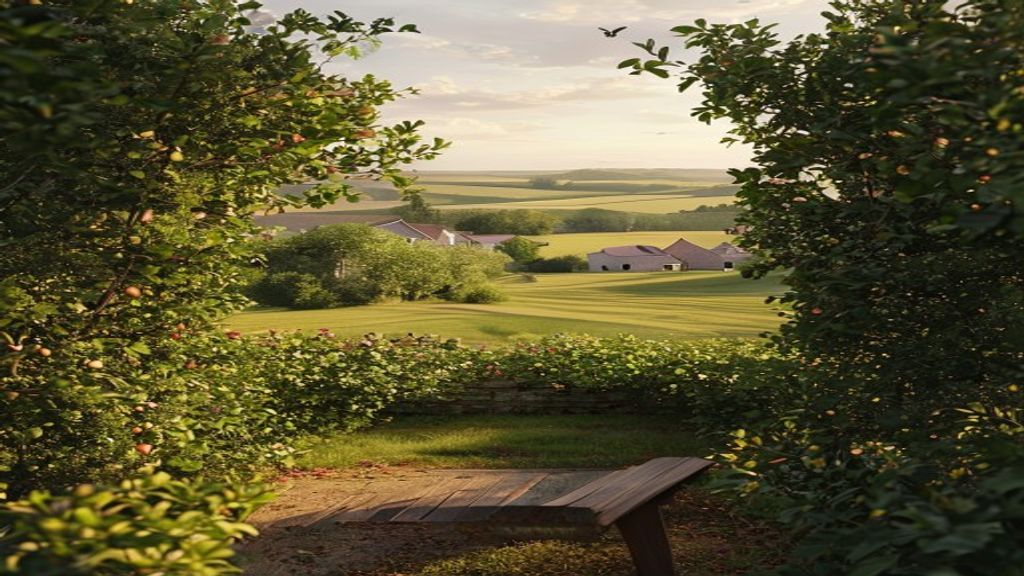
I am walking the path from the village road to the community's first buildings. There is no gate. No sign that says "Private Property." Instead, a hedge of hawthorn and elderberry — dense enough to define a boundary, open enough to see through, alive with birds. A gap in the hedge, wide as two people side by side, marks the entrance. Someone has placed a bench just inside it and a small board with today's schedule and the words: "You are welcome here. Find us in the kitchen or the garden."
I can feel the shift. The air is different past the hedge — not metaphorically, actually different. More birdsong. The smell of woodsmoke and bread. A woman I don't know sees me from the herb garden, raises a hand, walks over. She doesn't ask who I am or why I'm here. She asks if I've eaten. Within ten minutes I am sitting at a long table with a bowl of soup and the feeling that I have crossed not a border but a membrane — something alive that noticed me passing through it.
This is not a wall. A wall is built from contraction. This is a membrane, built from self-knowledge. It knows what it lets in. It knows what it lets out. And it trusts itself enough to stay open.
How It Lives Here
The flowing edge is a physical zone — six yurts and a shared washhouse set between the hedge and the main community spaces. Visitors stay here for one to three weeks. They eat with the community, work alongside, attend whatever they like. No interviews. No applications. The membrane does its own sensing. Some visitors arrive buzzing with plans and slowly quiet into the rhythm. Some arrive quiet and slowly unfold. Both are the membrane working.
A welcome team of two or three people rotates monthly. Their job is not gatekeeping — it is hospitality. Making sure every visitor knows where the kitchen is, when the circles happen, and that they are genuinely free to leave at any time. The freedom to leave is what makes the staying real. Some seasons the community opens wide, inviting groups, hosting gatherings. Other seasons it contracts, needing to digest what has entered. The membrane breathes.
The edge zone is also where the community meets its neighbors. The local farmer brings eggs on Thursday mornings and stays for coffee. Teenagers from the nearby town come for the Friday music night. The edge is not a buffer between "us" and "them." It is the place where the richest exchange happens — the way a forest edge, where woodland meets meadow, hosts more species than either ecosystem alone.
What Nature Teaches
Ecologists call it the edge effect: the boundary between two ecosystems is more biodiverse than either one. Where forest meets grassland, where river meets ocean, where coral meets open water — these are the zones of maximum creative exchange. The edge is not a line. It is a habitat of its own.
A cell membrane is perhaps the oldest technology of belonging. It lets water through. It lets nutrients through. It blocks toxins. It does this not through rigid rules but through molecular resonance — the shape of what approaches determines whether the membrane opens for it. And the membrane itself is alive, constantly rebuilding, adapting, responding to what the cell needs right now.
Your skin works the same way. It breathes. It senses. It protects without sealing. It heals itself when torn. It is, when you think about it, beautiful — not despite its permeability but because of it.
Where You Can See It
In Marinaleda, Spain, a village rebuilt itself as a cooperative with an open-door policy — the membrane is cultural, not physical, and the village thrives because of what flows through it. In Riace, a dying village in Calabria, the mayor opened the membrane to refugees and the village came back to life — empty houses filled, closed schools reopened, the field revived by new frequencies. Among the Arakmbut communities in Peru's Madre de Dios, protocols for welcoming outsiders have been refined over centuries — the membrane is permeable, discerning, and deeply alive.
What We're Building
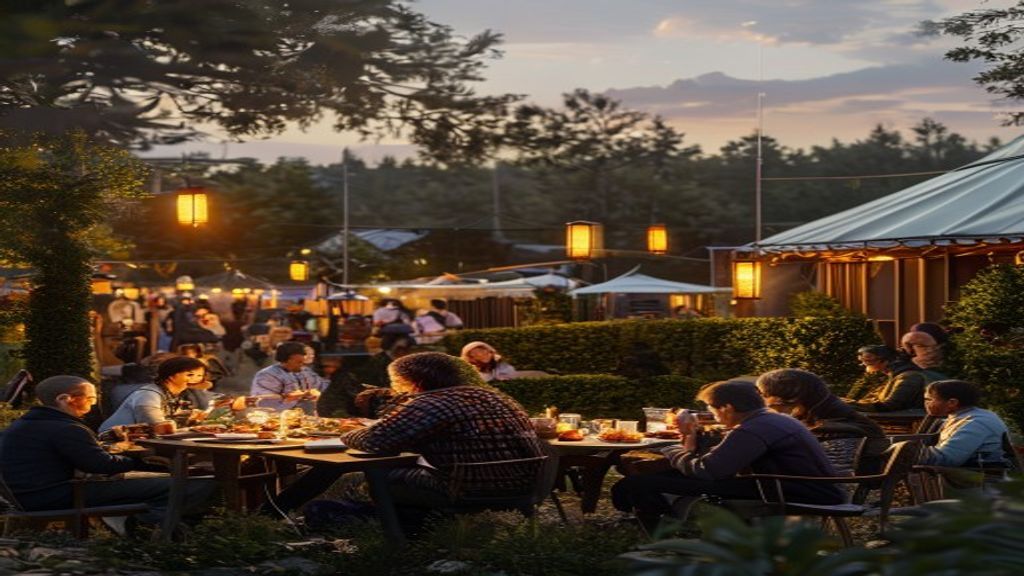
A physical flowing edge — guest accommodations that are beautiful, not afterthoughts. A welcome practice that trusts the field's intelligence over any checklist. A rhythm of opening and contracting that follows the community's actual capacity, not a policy written in a calmer season. An edge zone that is the community's most vibrant space, not its most guarded.
Resources
- Permaculture Research Institute — edge effect in ecological design (type: guide)
- Foundation for Intentional Community — community boundaries and membership processes (type: community)
The Questions That Live Here
- How do you keep the edge permeable without losing coherence — the way skin breathes without dissolving?
- What is the right rhythm of visitors to permanent members before the field loses its tone?
- How do you hold people who are neither fully in nor fully out — the ones who live in the membrane itself?
- When does hospitality become self-abandonment?
Influences and connections
Listening for voices…
Connected Frequencies
The people, places, works, and concepts the graph shows connected to this one.