Language
Integration
Living ExpressionHow the field repairs, weaves, dreams. Like winter in a forest — composting beneath surface, becoming soil for spring.
Not the absence of activity — a different quality of activity. Like winter in a forest: composting beneath the surface, becoming soil for spring.
The Feeling
It is two in the afternoon and the whole community has gone quiet. Not silent — quiet. You can hear wind in the tall grass, a bird somewhere in the orchard, the creak of someone settling into a hammock on the covered porch. The lunch dishes are washed. The afternoon work has not begun. This gap is not empty. It is held open on purpose, the way a musician holds a rest in the score — not the absence of music but a note with no sound that shapes everything around it.
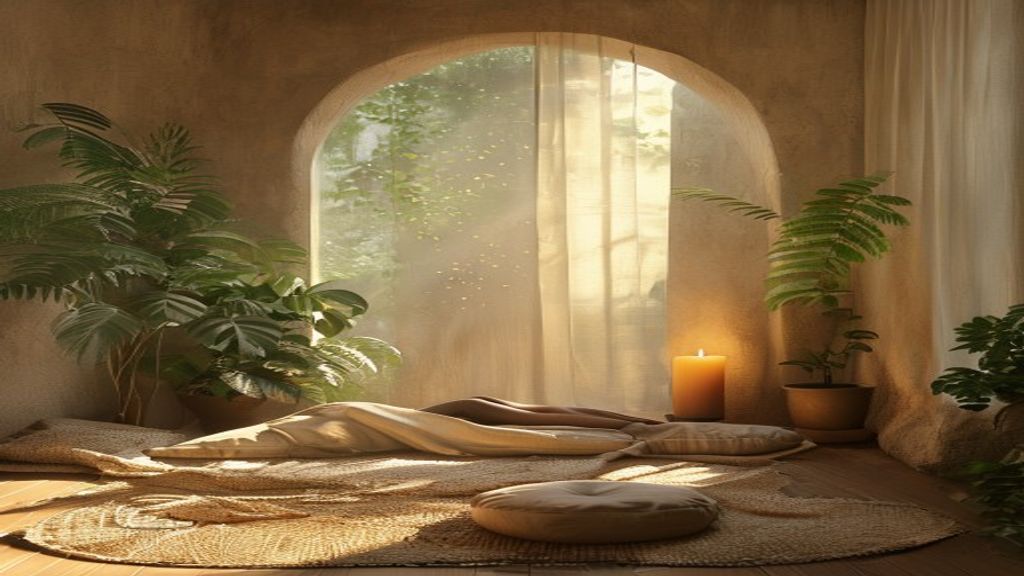
You are lying on the floor of the sanctuary with your eyes closed. The room smells like cedar and warm earth. Someone is breathing slowly a few feet away. Your mind, which was spinning plans all morning, has started to unspool. Not solving. Not planning. Just drifting in a way that feels like soil accepting rain — everything sinking deeper, finding its level.
Later, you will realize that the idea you needed arrived here, in this gap, not at the morning meeting. It surfaced the way dreams surface: whole, unbidden, wearing the shape of something you had not thought to look for. The gap was not wasted time. It was the most productive hour of your day — but the word "productive" has lost its meaning here. Something better has taken its place: generative. The rest generated what effort could not.
How It Lives Here
Every day between two and four, the community rests. Not a rule enforced — a rhythm honored. No loud tools. No meetings. No one knocks on your door. The kitchen is closed. The workshop is silent. Some people sleep. Some walk slowly through the garden. Some sit by the water and do nothing at all. The children, who resisted this at first, now protect it fiercely. They know that the afternoon rest is what makes the evening feel spacious.
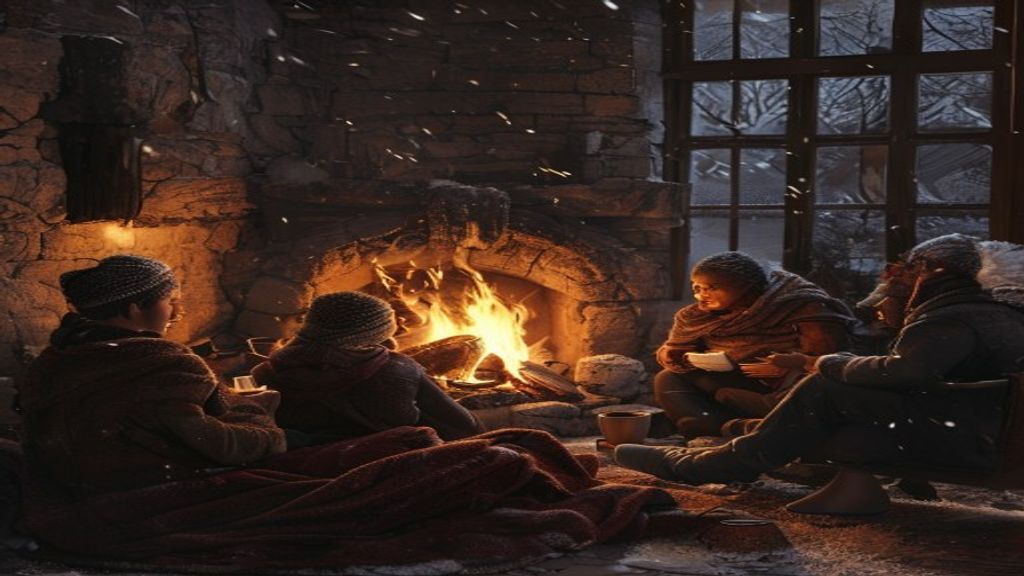
Seasonal rest runs deeper. In winter, the community does less. Fewer building projects. Shorter work days. Longer evenings around the fire, telling stories, fermenting things, mending clothes, playing music. The winter schedule is not a reduced version of summer — it is its own season with its own intelligence. The soil is resting. The seeds are dreaming. So are we.
When someone needs deep rest — from illness, from loss, from the slow exhaustion that comes from giving too much — the community reorganizes quietly. Their tasks are absorbed. Their meals appear. No one asks when they will be better. The field holds them the way a forest holds a fallen tree: patiently, with mycorrhizal tenderness, knowing that what lies still is doing its most essential work.
What Nature Teaches
A forest in winter looks dead. It is the most alive it will be all year. Underground, fungi are building new networks. Roots are storing sugars. Seeds are stratifying — requiring the cold, requiring the stillness, before they can germinate. If you skip winter, you get no spring. The dormancy is not optional. It is the season that makes every other season possible.
Your brain during sleep is not idle. It is consolidating memories, pruning connections that no longer serve, dreaming new patterns into existence. The glymphatic system flushes waste from neural tissue — a cleaning that only happens in deep rest. Deprive a person of sleep and they do not just get tired. They lose the ability to learn, to heal, to feel. Rest is not recovery from life. It is where life does its deepest work.
Fallow fields taught this to farmers thousands of years ago. Land that is never rested becomes barren. Land that is rested grows thick and wild with fertility. The Sabbath tradition encodes the same truth: one day in seven, the whole system pauses, and the pause is sacred. Not because a god demands it. Because the land demands it, and the body demands it, and the soul demands it. Every tradition that has survived long enough to matter has rest woven into its structure.
Where You Can See It
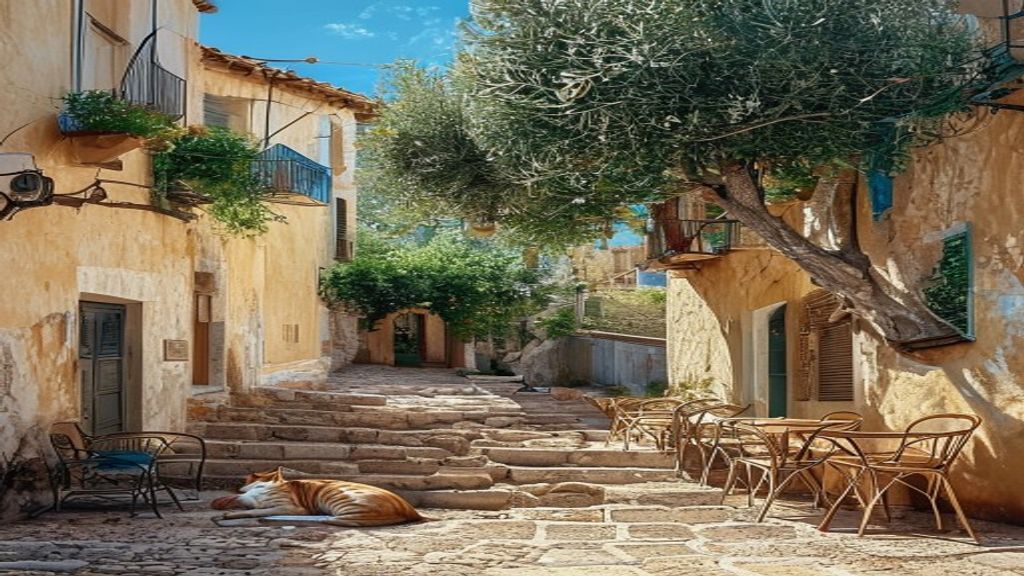
In Mediterranean villages — the ones that still keep the old rhythm — shops close after lunch and do not reopen until four or five. The streets empty. Shutters close against the heat. For two hours, the entire town rests together, and the evening that follows is long and alive with conversation and food and unhurried presence.
Visit Plum Village in southern France, where Thich Nhat Hanh's community practices rest as a form of awakening. The bell sounds and everyone stops — mid-sentence, mid-step, mid-thought. Three breaths. Then life continues, but slower, more present, reshaped by the pause.
In Dharamsala, Tibetan Buddhist practitioners enter multi-year solitary retreats in mountain hermitages. Not escaping the world — entering it more deeply. The rest is the practice. The stillness is where the deepest seeing happens. They emerge not diminished but clarified.
What We're Building
The sanctuary is always open. A single room with earthen walls, soft light, no screens, no clocks. Anyone can enter at any time. During the collective rest period it fills gently. At night it holds whoever cannot sleep. In the morning it is where the early risers sit before the day has shape.
The seasonal calendar is designed around rest, not despite it. Winter has thirty percent more unstructured time than summer. Projects launched in spring are expected to slow in autumn. The annual review asks not just "what did we accomplish?" but "did we rest well enough to know what to do next?"
There is a sabbatical rhythm too. Every seventh year, a community member can step back from all roles and responsibilities for a season. The community absorbs the gap. The person follows whatever their rest asks of them — travel, silence, deep sleep, creative wandering. They return not owing anything, carrying seeds from wherever the rest took them.
Rest Architecture
Rest does not happen by accident in a world that trained us to keep producing. It needs architecture -- not rules, but rhythms built into the bones of the day.
The daily pause (2-4pm). The whole community rests. Not enforced but honored: no loud tools, no meetings, no knocking on doors. The kitchen closes. The workshop goes quiet. Some people sleep. Some walk the garden slowly. Some lie in a hammock and watch clouds. Children learn to protect this time because they feel what it gives back -- an evening that arrives with spaciousness instead of exhaustion.
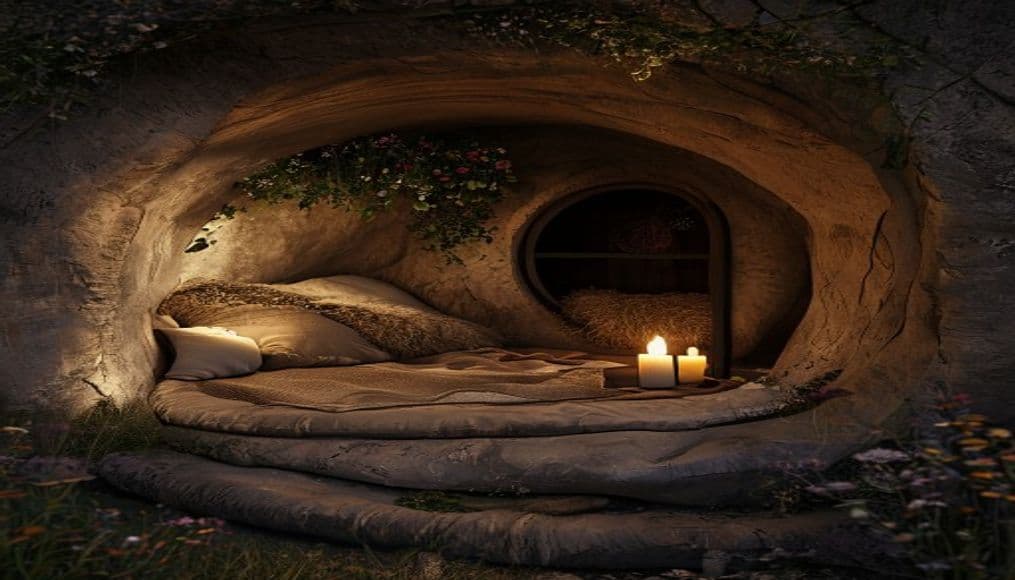
The sanctuary. Always open. Earthen walls, soft light, no screens, no clocks. Cushions and wool blankets on a cool clay floor. A candle someone always remembers to light. During the collective rest it fills gently. At night it holds whoever cannot sleep. In the early morning it is where the first risers sit before the day has shape. The room does not ask anything of anyone who enters. That is its gift.
Acoustic design. Rest requires buildings that know how to be quiet. Thick walls that absorb rather than reflect. Doors that close without sound. Bedrooms oriented away from workshops and kitchens. A buffer of trees or earthen mounds between active zones and rest zones. Silence is the most important sound a building can hold.
Sabbath Rhythms and Seasonal Rest
The weekly sabbath. One day in seven, the community does only what wants to be done. Not what needs to be done -- what wants to be. The garden waits. The construction waits. People cook if cooking brings them joy, walk if walking calls, sit by the fire if sitting calls. The practice teaches a truth that productivity culture obscures: the world does not end when you stop.
Seasonal calibration. Winter carries thirty percent more unstructured time than summer. Fewer building projects. Shorter work days. Longer evenings around the fire with stories, fermentation, mending, music. The winter schedule is not a reduced version of summer. It is its own season with its own intelligence. Projects launched in spring slow in autumn, the way sap retreats to the roots.
The sabbatical. Every seventh year, a community member can step back from all roles for a season. The community absorbs their tasks. The person follows wherever the rest leads -- travel, silence, deep sleep, creative wandering. They return owing nothing, carrying seeds from wherever the rest took them.
Tending the One Who Needs Deep Rest
When someone needs to lie down for a long time -- from illness, from grief, from the slow depletion that comes from giving beyond what was theirs to give -- the community responds the way a forest responds to a fallen tree. Quietly. Without questions. Their tasks are absorbed. Their meals appear at the door. No one asks when they will be ready. The field holds them with mycorrhizal tenderness, knowing that what lies still is doing its most essential work. The only question, asked gently after enough time has passed: what do you need that you have not yet asked for?
Resources
- Plum Village — Thich Nhat Hanh's community rest and mindfulness practices (type: guide)
- Sabbath/Sabbatical traditions — intentional community approaches to cyclical rest (type: community)
- Taize Community — ecumenical community modeling rhythms of activity and rest (type: community)
The Questions That Live Here
- How do we honor individual rest needs without making anyone feel they are falling behind?
- What is the right seasonal ratio — sixty percent rest in winter, thirty percent in summer?
- How do we build a culture where the person who rests well is valued as much as the person who works hard?
- When does rest become avoidance, and how do we tell the difference with tenderness?
- What does a community look like that trusts rest as deeply as it trusts work?
- How do we unlearn the guilt that productivity culture has woven into our nervous systems?
Influences and connections
Listening for voices…
Connected Frequencies
The people, places, works, and concepts the graph shows connected to this one.