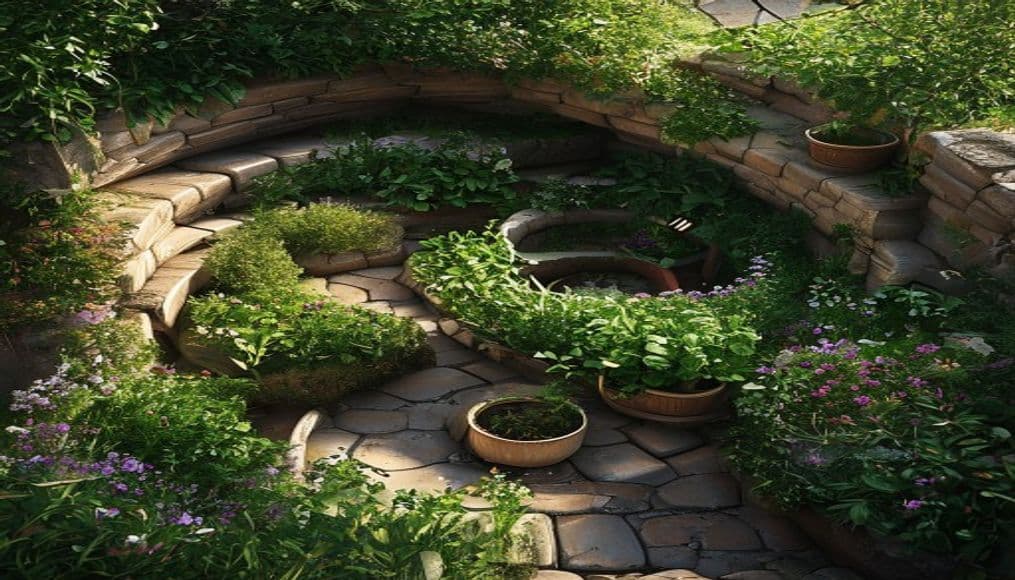
Language
Composting
Living ExpressionField transforms completed into nourishment for emerging. Leaf falls, becomes soil, feeds tree, grows new leaves. Nothing lost — higher octave.
A leaf falls, becomes soil, feeds the tree. Nothing ends here. Everything transforms.
The Feeling
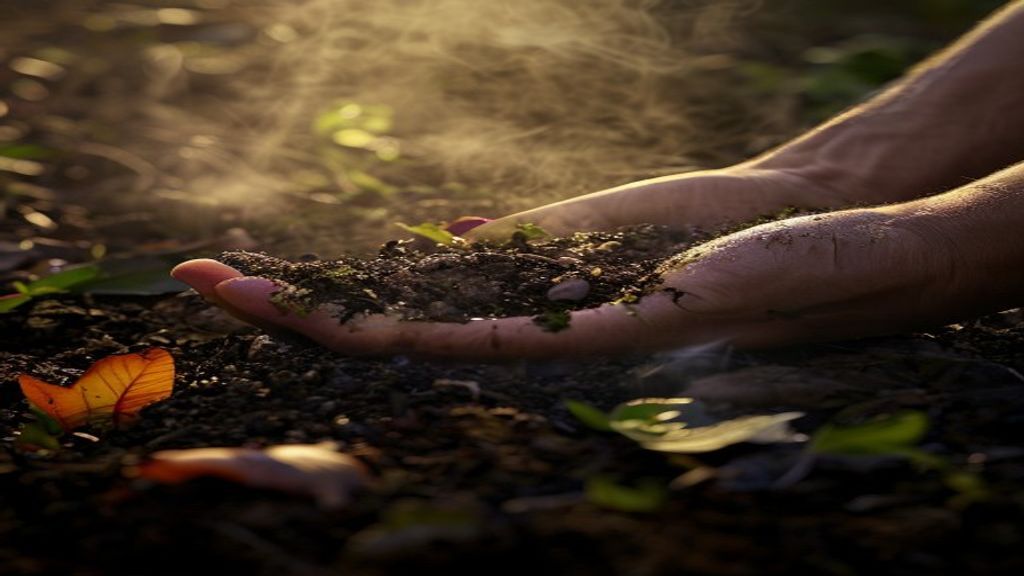
You kneel at the edge of the compost pile on a cool morning and push your hands into the dark center. It is warm — almost hot — and the smell rises up like bread baking underground. Yesterday this was melon rind, coffee grounds, the wilted greens nobody ate. Now it is becoming something else entirely. You can feel the heat of ten billion organisms doing their invisible work, and for a moment you understand that death is a word we invented because we could not see this part of the process.
There is a sweetness to holding something that is mid-transformation. The pile does not rush. It does not grieve what it was. It just keeps turning, keeps feeding, keeps becoming. You pull your hands out dark and warm and something in your chest loosens — the thing you have been carrying, the project that ended, the friendship that changed shape — it loosens because you can feel in your palms what happens next.
This is the oldest technology on the planet. Long before anyone built a wheel, the forest floor was running the most sophisticated recycling system in existence — turning every fallen thing into the foundation for every rising thing. We are not inventing composting. We are remembering how to participate in it.
How It Lives Here
In the community, composting is not hidden. Three open stations sit along the main path — you pass them on your way to the hearth, on your way to the garden, on your way home. Children learn early that the scraps from lunch become the soil that grows next season's tomatoes. The humanure system returns what the body releases back to the fruit trees. The cycle is visible, tangible, never abstract.
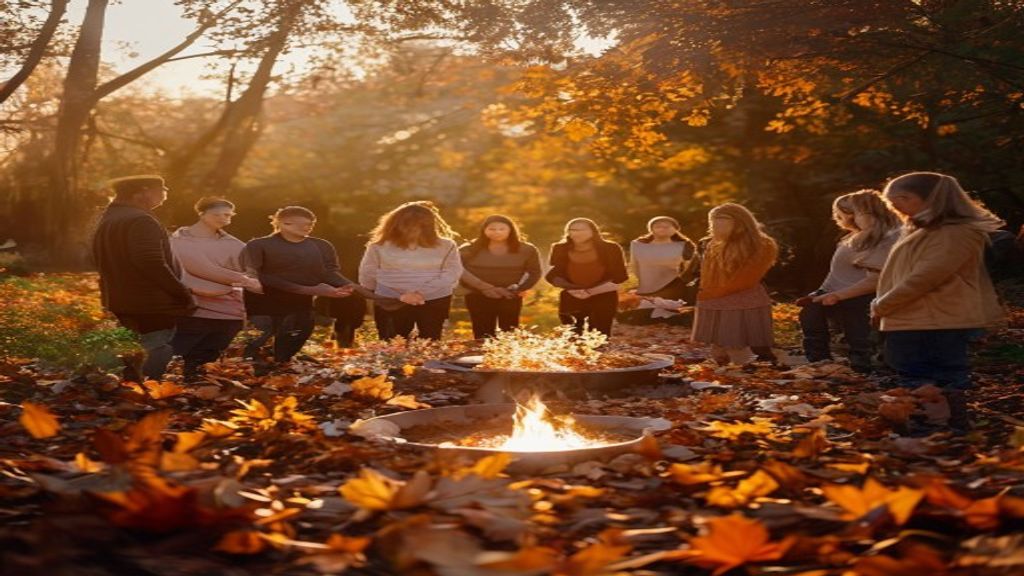
When a project runs its course, when a working group dissolves, when someone leaves, the community holds a composting ceremony. People gather in a circle. They name what was. They harvest what they learned — every relationship carries nutrients, and these get named aloud before anything is released. Then they place something symbolic — a drawing, a written intention, a dried flower — into a fire or into the earth. There is no pretending it does not hurt. But there is also no pretending it is the end.
The annual cycle makes this tangible. Each autumn, the community asks: what has completed? What served its purpose and can now be returned to the soil of possibility? Sometimes it is a governance structure. Sometimes it is a weekly gathering that ran its course. The composting ceremony gives it dignity — acknowledging that what dies well feeds what comes next.
What Nature Teaches
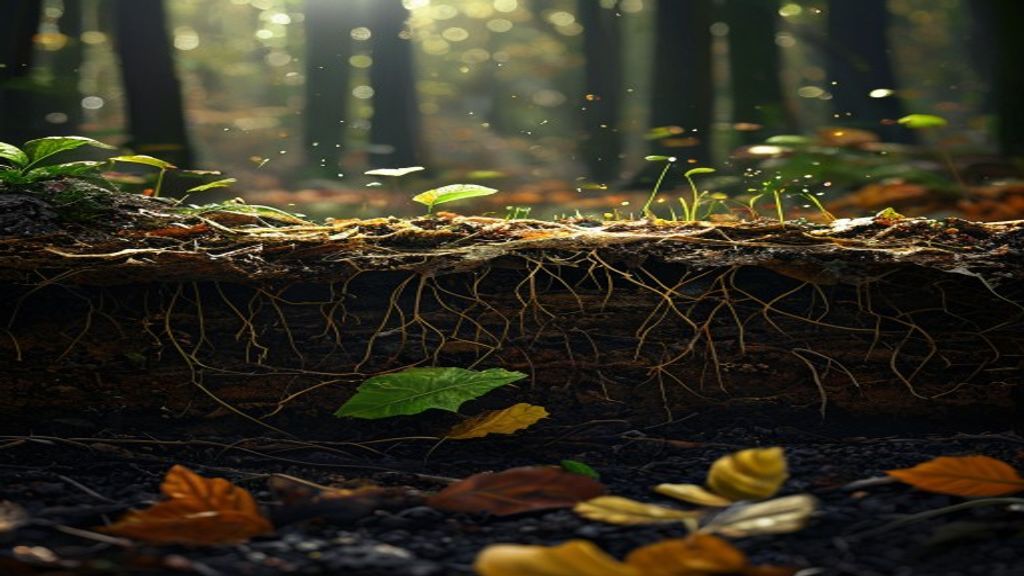
Watch a forest floor in October. The falling is generosity. Every leaf carries minerals pulled from deep bedrock, sugars synthesized from sunlight, and the tree releases all of it back to the soil. Fungi break it down. Bacteria transform it. By spring, that leaf is feeding the roots of the tree that dropped it, and the wildflowers beside it, and the seedling that just arrived.
Fermentation teaches the same lesson from another angle. The grape does not disappear when it becomes wine. The cabbage does not diminish when it becomes kimchi. Something more complex, more nourishing, more alive emerges from what looked like decay. The microorganisms that drive fermentation are not destroyers — they are collaborators working at a scale we cannot see.
The phoenix appears in every culture's mythology because every culture has watched this happen. Fire is not the opposite of life. It is the fastest form of composting — carbon returning to air, minerals returning to soil, heat released for whoever stands near enough to feel it.
Even stars compost. Every heavy element in your body — the iron in your blood, the calcium in your bones — was forged in a star that completed its cycle. The star's composting is what made you possible. Transformation at every scale, from the microbial to the cosmic, follows the same pattern: completion becomes nourishment becomes new life.
Where You Can See It
Walk the forest floor at any natural burial ground — places where bodies return to earth without embalming, without concrete vaults, just a linen shroud and the patient work of soil organisms. In Rhinebeck, New York, at Greensprings Natural Cemetery, the graves become meadow. The grief is real. The transformation is also real. The families who visit do not find headstones. They find wildflowers growing where someone they loved is becoming soil.
Visit Sandor Katz in rural Tennessee, where fermentation crocks line the shelves and the air smells like cultures doing their ancient work. Every jar is a composting ceremony in slow motion — old form dissolving, new complexity emerging. The sauerkraut on his shelf is alive with more organisms than there are stars in the Milky Way, and every one of them is doing the same work as the compost pile: turning what was into what will be.
What We're Building
The composting system here serves two hundred people and wastes nothing. Three-bin thermophilic stations handle food scraps and garden waste. A separate humanure system with sawdust and proper temperature monitoring turns what would be sewage into orchard soil over eighteen months. Every output feeds an input. The children who turn the compost today eat the strawberries it grew last year.
But the physical infrastructure is only half of it. The composting ceremonies — held whenever something in community life completes its cycle — are how we practice the skill of letting go without calling it loss. A vermicomposting station near the children's area lets the youngest members watch red wigglers turn kitchen scraps into black gold in real time. They name the worms. They feed them. They understand transformation before they have a word for it.
The composting mindset shapes how the community relates to everything that ends. A building that has served its decades returns its materials to the earth. A practice that no longer serves is thanked and released. Nothing is wasted because nothing is treated as waste — only as material in transition, waiting for its next form.
Living Composting Systems
The physical systems are simple. What matters is that every person in the community can see, smell, and touch the transformation happening.
Three-bin thermophilic stations. Three bays built from pallets or timber: one filling, one cooking, one finishing. Kitchen scraps and garden waste go into the active bay, layered with carbon -- dry leaves, straw, wood chips. When the bay is full, it moves to the cooking position. Internal temperatures reach 55-65 degrees Celsius within days, hot enough to transform pathogens and weed seeds into clean fertility. A long-stemmed thermometer lets anyone check the pile's heartbeat. Children love this -- pressing their hands against the warm side of the pile on a cold morning, feeling the life inside.
Humanure system. Sawdust toilets in every dwelling, collected weekly into dedicated bins that cook separately from food compost. Eighteen months of thermophilic processing, temperatures monitored, before the finished material goes to orchard trees -- never to vegetable beds. The system returns what the body releases to the fruit it will eat next year. The cycle is complete, visible, and honored rather than hidden.
Vermicomposting near the children's area. Shallow wooden bins with red wigglers. Kitchen scraps go in, dark castings come out. The worms have names. The youngest community members feed them and watch the transformation happen in real time -- melon rind becoming black gold in weeks. This is where composting stops being a concept and becomes a relationship.
Emotional Composting
The same process that turns kitchen scraps into soil also turns grief, disappointment, and ended things into the ground from which new life grows. The community practices this deliberately.
The composting ceremony. Held whenever something completes its cycle -- a project, a working group, a season, a relationship. The circle gathers. People name what was: what they received, what they gave, what they learned. Nothing is skipped. The hard parts are named alongside the beautiful parts, because both carry nutrients. Then something symbolic -- a written word, a dried flower, a drawing -- goes into the fire or the earth. The ceremony does not rush toward hope. It stays with what is ending until the ending feels complete.
Seasonal release. Each autumn, the community asks together: what has served its purpose? What can be returned to the soil of possibility? Sometimes it is a governance structure that no longer fits. Sometimes it is a weekly gathering that ran its course. The composting ceremony gives it dignity -- acknowledging that what transforms well feeds what comes next.
Sitting with what is mid-process. Not everything is ready to be released. Some grief needs more time. Some endings have not finished ending. The community practice is to hold this too -- to resist the urge to name transformation before it has actually happened. The pile is not done until it is done. Rushing it makes poison, not soil.
Resources
- Humanure Handbook — Joseph Jenkins' free guide to composting human waste safely (type: book)
- ATTRA Composting Guide — free publications on farm-scale composting systems (type: guide)
- Appropedia Composting — open wiki articles on composting toilets, vermicomposting, and more (type: community)
- The Lazarus Principle — ego death, rebirth, innocence — individual transformation mirroring civilizational rebirth (type: guide)
The Questions That Live Here
- How do we make composting toilets feel natural rather than strange to newcomers?
- What ceremonies help people release a project or relationship without pretending it did not matter?
- Where is the line between honoring grief and rushing toward "transformation"?
- How do children experience the composting cycle differently than adults?
- What can be composted that we currently treat as permanent — institutions, beliefs, identities?
- How do we know when something is ready to be released versus when it needs more time?
Influences and connections
Listening for voices…
Connected Frequencies
The people, places, works, and concepts the graph shows connected to this one.