Language
Nourishing
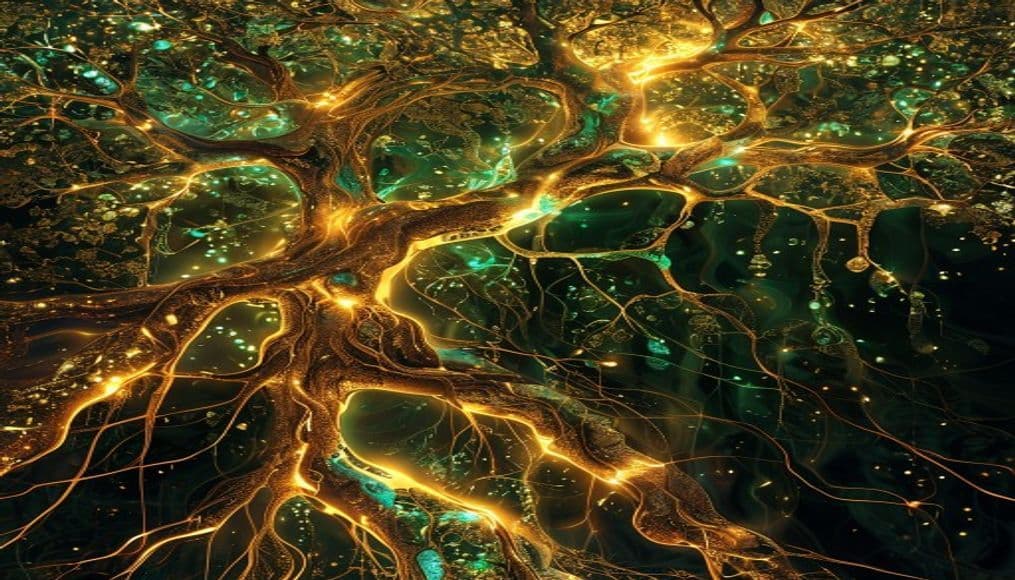
System / FlowEverything that sustains — circulates like blood, water through soil, nutrients through mycelium. Flows to where vitality needs it. Mother trees feeding seedlings.
Everything that sustains — circulates like blood, water through soil, nutrients through mycelium. Flows to where vitality needs it. Mother trees feeding seedlings.
The Feeling
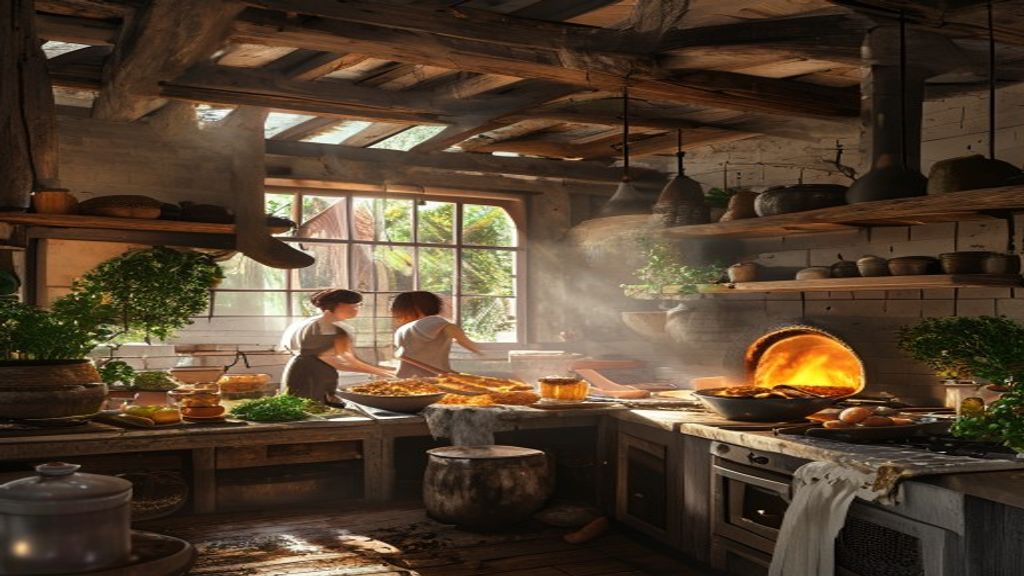
The kitchen smells like bread. Not the industrial sweetness of a bakery but the deep, sour, ancient smell of dough that has been fermenting for three days with a starter that is older than anyone in the community. Your hands are in it. The dough pushes back against your palms with its own aliveness — because it is alive, billions of organisms transforming grain into something your gut can recognize as kin. You are not making food. You are collaborating with food.
When the bread comes out of the cob oven — the oven that forty people built together from the clay beneath their feet — the crust crackles as it cools, and that sound draws people from across the grounds the way a bell draws monks to prayer. They come not because they're hungry in the ordinary sense but because something deeper is being called. Four hundred thousand years of campfire. The original gathering. The place where humans became human: around shared food, shared warmth, shared flame.
You tear the bread and pass it. The person beside you tears their piece and passes it. A bowl of soup from this morning's garden — tomatoes still warm from the sun, basil cut ten minutes ago, onions that someone wept over while chopping because the tears came and the kitchen held them. Every bite is an act of belonging. You are eating the land. The land is becoming you. The boundary between nourisher and nourished dissolves in the mouth.
How It Lives Here
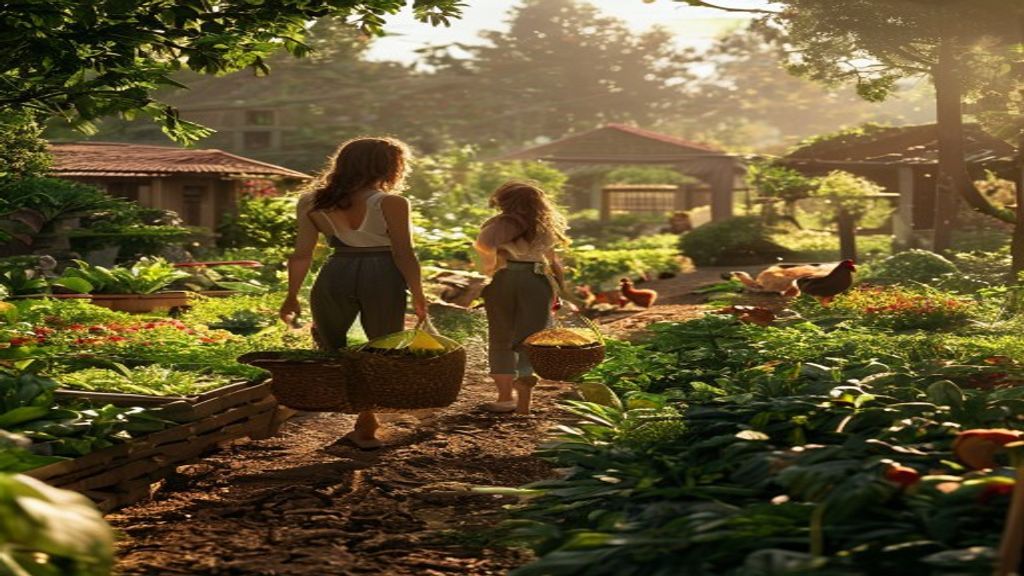
Two meals a day are shared by everyone. Not because of a rule — because the kitchen is the heart, and the heart beats for all. Rotating teams of three or four people cook, and cooking is not a chore but a practice. The cook team rises before dawn, walks the garden in first light, and lets the garden decide the menu. What is ripe? What is abundant? What does the soil want to offer today? The meal emerges from the land's own rhythm, not from a recipe book.
The kitchen never closes. Between meals, someone is always there — fermenting sauerkraut, straining kefir, tending the sourdough, drying herbs, putting up preserves for winter. The fermentation station sits in full view, not hidden in a back room: crocks of kimchi bubbling gently, kombucha mothers floating in their sweet tea, a row of glass jars where vegetables transform themselves slowly into something the gut knows how to love. These living cultures are members of the community. They are fed, tended, spoken to. They are the oldest residents.
Food comes from the land first. What the garden cannot provide, the local farms offer. Nothing arrives by air. The meals taste like the place — the mineral signature of the soil, the particular sweetness of this valley's water, the herbs that grow wild on the hillside and nowhere else. When a guest eats here for the first time, they often go quiet. Not because the food is sophisticated but because it is honest. Every ingredient has a story that ends in this bowl, this mouth, this moment. Nourishment is not what you eat. It is knowing where it came from and who grew it and whose hands prepared it.
What Nature Teaches
Beneath a forest floor, the mycorrhizal network runs like a circulatory system. Mother trees — the oldest, tallest, most connected — feed their seedlings through these fungal highways. A seedling in shade, too young to photosynthesize enough to survive, receives carbon and sugars from its mother through roots it cannot see. The mother tree doesn't decide to feed it. The gradient exists and nutrients flow. When a mother tree is dying, she sends a final flood of stored carbon through the network to her neighbors — not her own offspring, but whoever is connected. No accounting. No reciprocity calculation. Nourishment flowing to where life needs it most.
Blood moves through your body the same way. You don't decide to send oxygen to your liver. The gradient carries it — high concentration to low, abundance to need, without a manager, without a plan. Your circulatory system is the oldest democracy: every cell receives what it requires because the cell IS the circulation. Hoarding is a disease. When a clot forms, the body treats it as emergency. In the field, hoarding — of food, of resources, of attention, of love — is recognized the same way: not as sin but as blockage. The response is not punishment but flow.
The Potlatch tradition of the Pacific Northwest Indigenous peoples: wealth expressed as giving, not accumulating. The richest person was the one who gave the most away. A feast where the host emptied their stores, gave their blankets, their tools, their art — and in the giving, became truly wealthy in the currency that matters: belonging, gratitude, the knowledge that the network would nourish them in return. Not as transaction but as tide. The tide doesn't keep score. It comes in. It goes out. Everything is fed.
Where You Can See It
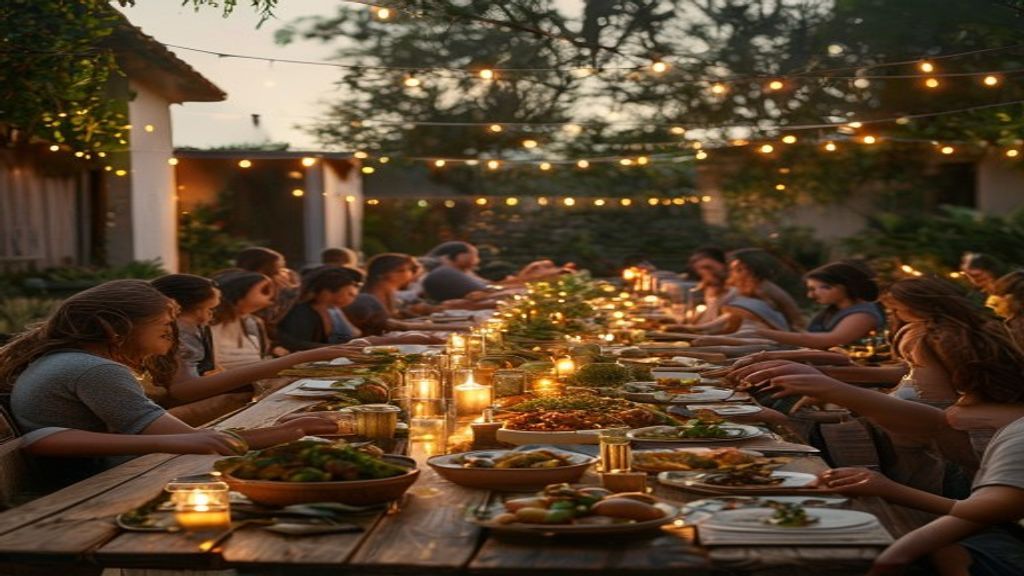
A kibbutz dining hall at dinner. Three hundred people eating the same meal at the same time in the same room. The food is simple — what the land produced, prepared by this week's kitchen team. Children run between tables. Grandparents sit with teenagers. The conversation crosses generations because the table crosses generations. A hundred years of this practice and the culture it produces is unmistakable: a deep, unglamorous, unsentimental belonging that comes from sharing substance. You are what you eat, and when you eat together, you become each other.
A grandmother's kitchen in southern Italy. The sauce has been simmering since morning. She didn't measure anything. Her hands know. The pasta is handmade — the same recipe her grandmother made, and hers before that. When the family gathers around the table, what is served is not food but continuity. The meal is an unbroken thread connecting this moment to centuries of hands in dough, mouths fed, bodies sustained. Nourishment as lineage. As love made edible.
Mondragon, Basque Country. Eighty thousand worker-owners in a cooperative network that has been circulating resources for seventy years. When one cooperative thins, the network routes more life there — resources flow to where they're needed, workers shift between cooperatives, the whole system adjusts like a body sending fresh blood to a place asking for reinforcement. This is nourishing at the economic scale: not charity, not redistribution, but circulation. The same principle as mycelium, expressed through paychecks and solidarity.
What We're Building
The kitchen-hearth is the center of the community the way the heart is the center of the body. Not the meeting room, not the office, not the temple — the kitchen. Where fire lives. Where food transforms. Where hands work together and conversations happen sideways, while chopping, while stirring, while waiting for water to boil. The deepest truths are spoken over cutting boards.
The food system is a closed loop: soil grows food, food nourishes bodies, bodies produce compost, compost feeds soil. The community's metabolism is visible — you can see it in the garden beds, in the compost pile steaming in the morning cold, in the fermentation crocks that turn yesterday's abundance into tomorrow's nourishment. Nothing is wasted because waste is a concept the field doesn't recognize. There is only circulation: faster and slower, but always moving.
Meals are the primary resonance practice. Sitting close enough to feel the person beside you. Eating slowly enough to taste. Passing food hand to hand — the physical transfer that says, without words, "I am feeding you and you are feeding me and neither of us can survive alone." At fifty people, the shared meal is intimate. At a hundred, it becomes a village feast. At two hundred, it buds into two kitchens, two hearths, connected by the people who move between them carrying plates and stories.
Resources
- One Community - Permaculture — open-source food system design (type: blueprint)
- ATTRA Sustainable Agriculture — 300+ free publications on regenerative farming (type: guide)
- The Art of Fermentation — Sandor Katz — fermentation as cultural practice, not just food preservation (type: book)
The Questions That Live Here
These are questions the kitchen holds while it cooks:
- What is the difference between nourishing and feeding?
- What happens when someone refuses the shared meal — what are they actually refusing?
- Can a community be nourished by food it didn't grow?
- What is the role of fasting in a nourishing culture — does the field need hunger too?
Influences and connections
Listening for voices…
Connected Frequencies
The people, places, works, and concepts the graph shows connected to this one.