Language
Rhythm
Living ExpressionCircadian, seasonal, lunar. Morning opens, midday radiates, afternoon integrates, evening gathers. Time as crystalline structure — nested rhythms.
The field's heartbeat. Not a schedule — a pulse. Dawn, morning, midday, afternoon, evening, night. Seasons. Moon cycles. The breath beneath the breath.
The Feeling
You wake before the alarm. Not because you're anxious — because your body knows. Dawn is coming. Something in your cells, older than language, older than thought, has been sensing the light through your closed eyelids and the temperature through your skin, and now it says: rise. This is rhythm. Not the clock on the wall but the clock in the blood.
Spend a week without artificial light and you'll feel it sharpen. By day three, your body begins to anticipate meals before hunger arrives. By day five, sleep comes like a tide — not something you choose but something that carries you. By day seven, you're waking with the birds, tiring with the sun, dreaming longer and stranger dreams under the moon's pull. You haven't learned a new skill. You've remembered an old one. The rhythm was always there. You just couldn't hear it over the noise.
What Nature Teaches
The ocean breathes twice a day. Tide in, tide out — pulled by the moon, answered by the earth, the same rhythm for four billion years. Every creature in the intertidal zone has built its entire existence around this pulse. The barnacle opens when the water comes, closes when it leaves. The crab hunts at low tide, hides at high. Not because they decided to. Because rhythm is the architecture of life, and every living thing is a room built inside it.
Your heart doesn't beat at a fixed rate. It accelerates on the inhale, decelerates on the exhale. A rigid heartbeat is a sign of disease. A responsive one — fluid, dancing between fast and slow — is resilience. Rhythm is not metronome. Rhythm is alive.
The menstrual cycle mirrors the moon: twenty-eight days, waxing and waning. Before electric light, women's cycles synchronized with the lunar phases and with each other. The body knew it was part of something larger. Give it darkness and it remembers.
How It Lives Here
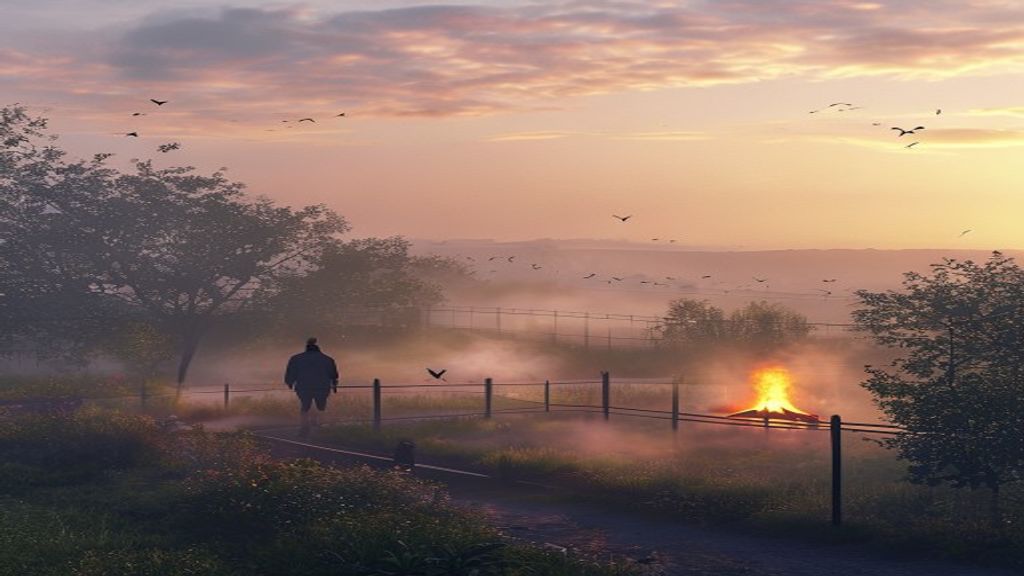
The day has a shape, visible on the shared board by the kitchen. Dawn: stillness, fire-tending. Morning: creation, building, planting — the hours when energy peaks. Midday: the long meal, the warmth of bodies feeding bodies. Afternoon: integration, rest, the energy turning inward. Evening: fire circle, story, song. Night: sleep, dream, the underground work that consciousness does when the waking mind lets go.
Nobody enforces it. But the rhythm becomes self-reinforcing — bodies entrain to it the way pendulum clocks on the same wall synchronize their swings. After a few weeks, the community breathes together. The seasons reshape everything: winter days shorter, softer, more inward; summer stretching outward into early dawns and late evenings. The community moves with them the way a whale follows ocean currents: the path of least resistance, which is also the path of deepest nourishment.
Where You Can See It
Benedictine monasteries. Matins before dawn, shared work in the morning, common meal, prayer, silence, sleep. Not productivity software. A human day shaped so the body remembers how to bow to time.
Mediterranean towns in summer. Morning market while the light is gentle, midday pause while the heat gathers, evening piazza when the air opens again. The same street carrying three different frequencies in one day.
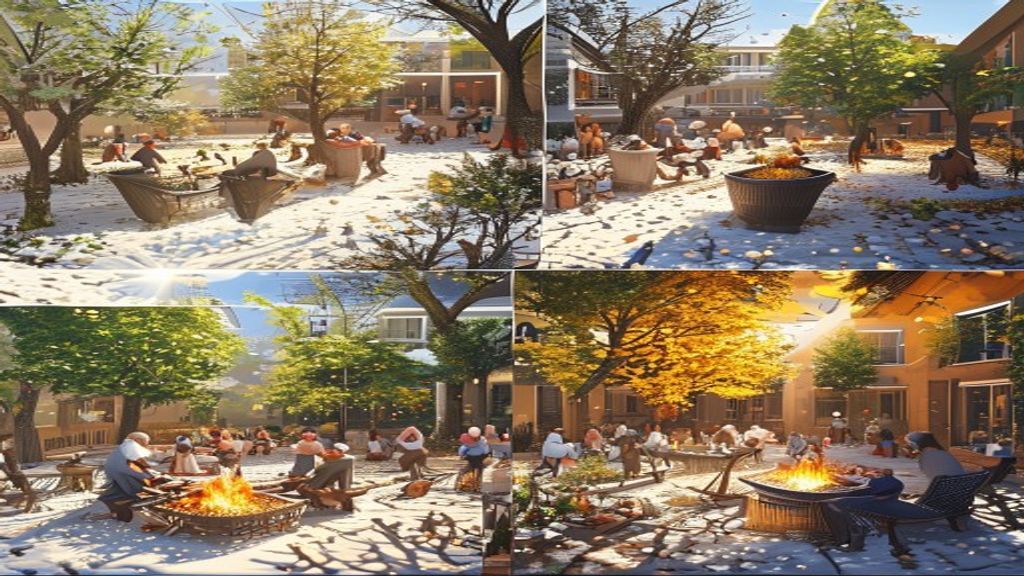
A household living close to land. Fire lit before sunrise, hands in soil while the dew still holds, long table at midday, shade in the afternoon, porch talk at dusk, deep night with no blue light cutting across it. Rhythm becomes visible when the day belongs to the world again.
What We're Building
Not schedules that dominate the body, but rhythms the body can trust. A day with distinct frequencies. A week with built-in widening and softening. A year that honors inward seasons as much as outward ones. Enough repetition for the field to settle. Enough openness for the living pattern to keep breathing.
The Questions That Live Here
These are questions the body keeps listening with:
- How does a community hold collective rhythm when individual rhythms genuinely conflict — the night owl and the early riser sharing a kitchen?
- What is the right balance between structure and flow — enough rhythm to entrain, enough space to breathe?
- Can a community develop sensitivity to longer rhythms — seven-year cycles, generational turns — and how would that change its decisions?
Influences and connections
Listening for voices…
Connected Frequencies
The people, places, works, and concepts the graph shows connected to this one.